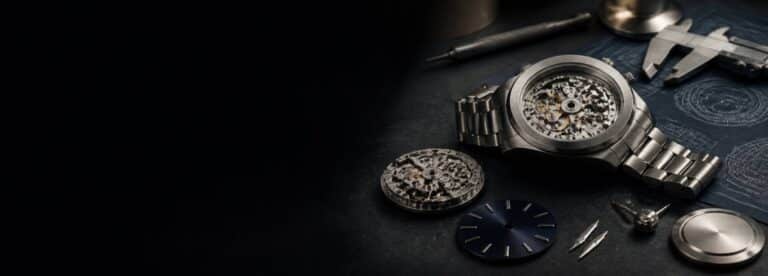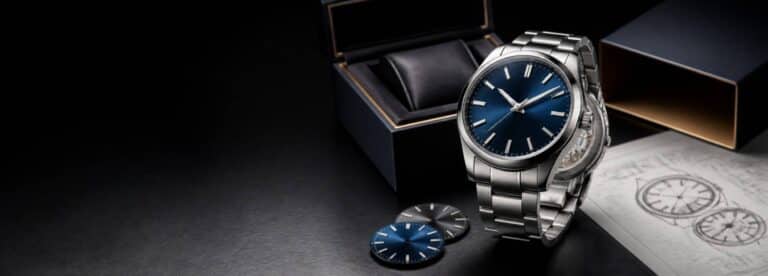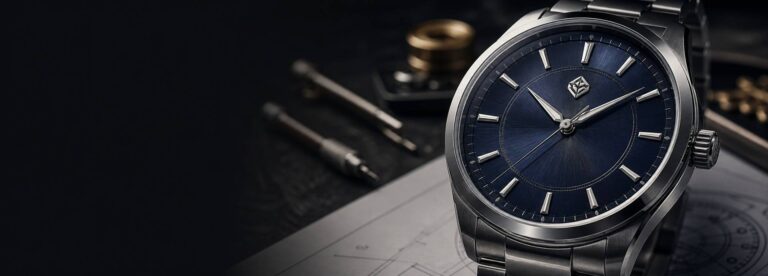
Launching a watch brand no longer has to mean building an entire product development operation from the ground up. For brands, retailers, distributors, and organizations entering the premium watch market, private label manufacturing can provide a practical route to launch a distinctive collection of automatic or mechanical watches under their own name.
With the right watch platform, a clear brand direction, and an experienced manufacturing partner, you can create a product line that reflects your identity without taking on the time, cost, and technical risk of developing every component from zero.
This guide explains how to launch your own watch brand with private label manufacturing—from defining your market position and selecting a mechanical watch platform to approving samples and preparing for production.
Important: Private label watch manufacturing is intended for businesses, retailers, distributors, and organizations planning a production order. It is not designed for one-off personal watch customization.
What Does It Take to Launch a Watch Brand?
A successful watch brand begins with more than a logo on a dial. Your product needs a defined customer, a recognizable market position, a coherent design direction, and a reliable production plan.
Before selecting a supplier or choosing a watch model, answer these questions:
- Who will buy your watches?
- What price range will your brand target?
- Will your collection focus on classic dress watches, sport watches, dive watches, skeleton watches, or another category?
- Do you want automatic mechanical movements, manual-wind movements, or quartz?
- Which sales channels will you use: direct-to-consumer, retail stores, distributors, corporate gifting, or another model?
- What makes your watch collection different from competing products?
Private label manufacturing works best when you already know the basic direction of your brand, even if your design is not yet final. A strong brief allows the manufacturer to recommend appropriate watch platforms, materials, branding options, and production solutions.
For a deeper introduction to this model, read our guide: What Is Private Label Watch Manufacturing?
Step 1: Define Your Watch Brand Positioning
The first step is to decide where your brand belongs in the market. “Luxury” can mean different things to different customers, so define what it means for your collection.
For example, your positioning may be based on:
- Swiss-inspired classic mechanical styling
- Contemporary minimalist automatic watches
- Vintage-inspired field or pilot watches
- Sport-luxury dive watches
- Skeleton watches with visible mechanical movement
- Limited-edition branded watches for an established lifestyle, jewelry, automotive, or hospitality business
Your positioning should guide every later decision, including case design, movement selection, materials, dial treatment, strap choice, packaging, and retail price.
A premium brand should avoid mixing too many unrelated ideas in its first collection. A focused launch is usually stronger than a broad catalog. Rather than offering ten disconnected styles, consider launching a small, cohesive line with a clear signature design language.
Step 2: Choose the Right Private Label Watch Platform
Private label does not mean that every watch must be identical to another product on the market. It means you begin with an established and manufacturable platform, then customize the elements that communicate your brand.
A watch platform may include a proven combination of:
- Case shape and diameter
- Case material, such as 316L stainless steel, titanium, or ceramic
- Automatic mechanical movement
- Crystal type and bezel configuration
- Dial layout and index style
- Hands, crown, caseback, and water-resistance structure
- Leather strap, rubber strap, or metal bracelet
Starting with an existing platform can reduce development uncertainty and shorten the route from idea to production. It also lets you focus resources on the aspects customers see and remember: the dial, finishing, color palette, branding, packaging, and overall brand presentation.
When reviewing a platform, ask whether it fits your intended price point and customer expectations. A watch aimed at premium retail customers should have a coherent relationship between its movement, case construction, materials, visual details, and packaging.
Step 3: Select a Suitable Mechanical Movement
For many premium watch brands, the movement is central to product positioning. Automatic mechanical watches appeal to customers who value craftsmanship, engineering, and the tactile experience of traditional watchmaking.
Your movement choice affects:
- Watch thickness and case design
- Date, open-heart, skeleton, GMT, or other complication options
- Expected performance and service requirements
- Product cost and retail positioning
- Long-term supply planning
An automatic movement may be appropriate for a versatile daily-wear collection, while an open-heart or skeleton configuration can make the mechanical character more visible. The best choice depends on the product story you want to tell—not simply on using the most complicated movement available.
Before finalizing a configuration, ask your manufacturing partner which movement options fit the selected case, dial layout, and intended production volume. Confirm movement availability early, particularly if your launch timeline is important.
Step 4: Customize the Elements That Make It Your Brand
This is where private label manufacturing becomes a brand-building tool. A well-executed private label watch should feel like part of your brand system—not like a generic product with a logo added at the last stage.
Depending on the watch platform and order requirements, customization may include:
- Brand logo and wordmark on the dial
- Custom dial colors, textures, patterns, or finishes
- Applied indexes, printed details, and luminous elements
- Customized hands and second-hand color
- Engraved, printed, or exhibition caseback details
- Crown logo or emblem
- Strap material, color, stitching, and buckle branding
- Bracelet finishing and clasp engraving
- Custom watch boxes, warranty cards, manuals, and outer packaging
The dial is often the most important visual component because it carries your brand identity every time the customer looks at the watch. However, the most effective collections maintain consistency across the full product experience. Your packaging, typography, color choices, strap options, and printed materials should all support the same market position.
Avoid over-customizing without a clear design rationale. A disciplined combination of a distinctive dial, strong logo placement, considered colors, and premium packaging can often create more impact than adding too many unrelated details.
Step 5: Plan Your MOQ and Product Budget
Minimum order quantity, or MOQ, is a central part of private label watch planning. The realistic MOQ for a project depends on the selected platform, required customization, movement, materials, packaging, and whether new tooling or special components are needed.
Your project budget should account for more than the unit price of the watch. Consider:
- Product configuration and movement selection
- Dial, caseback, crown, strap, or bracelet customization
- Sample development and revision needs
- Custom packaging and printed materials
- Quality-control requirements
- Freight, import duties, warehousing, and fulfillment
- Product photography, launch marketing, and after-sales planning
For a first collection, it is usually better to start with a commercially viable configuration that fits your expected sales volume than to create a highly complex product that stretches the budget too early.
Be transparent with your manufacturer about your estimated order quantity and target market. This allows them to recommend an option that balances visual impact, product quality, production efficiency, and budget.
Step 6: Prepare a Clear Watch Project Brief
A clear brief makes the development process faster and reduces costly misunderstandings. You do not need to provide production-ready technical drawings for a private label project, but you should communicate your requirements as precisely as possible.
A useful watch brand brief includes:
- Brand name and company profile
- Target customer and target retail price
- Product category and preferred watch style
- Preferred case shape, size, and material
- Automatic or mechanical movement preference
- Dial colors, logo files, and visual references
- Strap or bracelet requirements
- Packaging requirements
- Estimated quantity and desired launch timeline
- Target sales countries or regions
Reference images are helpful, especially when they show the specific details you like: a dial texture, bezel shape, case finishing, hand style, or packaging presentation. However, references should be used to communicate direction, not to copy another brand’s protected design.
If you have existing brand guidelines, provide your logo files, color specifications, fonts, and packaging identity at the beginning of the project. This helps ensure consistency from the sample stage onward.
Step 7: Review and Approve the Sample
Never move directly into full production without reviewing a sample. The sample stage is your opportunity to confirm whether the watch looks, feels, and functions as intended.
During sample review, check:
- Logo placement, size, and legibility
- Dial color accuracy under different lighting
- Alignment of indices, hands, date window, and bezel markings
- Case finishing, polishing, brushing, and engraving quality
- Strap, bracelet, buckle, and clasp details
- Function of the movement and crown
- Overall comfort, thickness, and wrist presence
- Packaging quality and brand consistency
Whenever possible, review the physical sample rather than relying only on digital artwork or photographs. A mechanical watch is a physical product, and details such as color tone, weight, finishing, and wearability are much easier to judge in person.
If revisions are necessary, document them clearly in writing. Confirm the final approved specifications before production begins.
Step 8: Confirm Production, Quality Control, and Delivery
After sample approval, the project moves into production. At this point, all critical specifications should be confirmed: the watch configuration, branding artwork, packaging, quantity, inspection standards, and delivery arrangement.
A professional production plan typically includes:
- Final artwork and specification confirmation
- Material and component preparation
- Assembly and functional testing
- Cosmetic inspection and quality control
- Packaging and final packing inspection
- Shipping preparation and export documentation
Quality control is particularly important for premium mechanical watches. The finished product should be inspected for both functional and cosmetic consistency, including movement operation, time-setting behavior, dial alignment, case finishing, strap or bracelet assembly, and packaging condition.
If you plan to sell internationally, discuss shipping arrangements, labeling needs, documentation, and destination-market requirements with your supplier before final shipment.
Private Label vs Custom OEM: Which Is Best for a New Watch Brand?
Private label is often the stronger starting point when speed, controlled development risk, and an efficient path to market matter most. Custom OEM is usually more suitable when your brand requires a proprietary case, a unique structural design, special tooling, or a deeply differentiated product architecture.
| Consideration | Private Label | Custom OEM |
|---|---|---|
| Starting point | Established, manufacturable watch platform | New or highly modified watch design |
| Development time | Typically shorter | Typically longer |
| Product customization | Branding, dial, colors, straps, packaging, selected details | Greater freedom across structure, components, and design |
| Tooling requirements | Often lower, depending on customization | May require new tooling and engineering work |
| Best for | New brands, retailers, distributors, and efficient product launches | Brands with unique design requirements and larger development scope |
Private label is not a compromise when it is executed strategically. It can be the right way to test a market, establish a visual identity, build sales data, and create a foundation for later OEM development.
Build Your Own Watch Brand with a Clear Launch Plan
To build your own watch brand successfully, begin with a product concept that is commercially realistic and visually coherent. Choose a watch platform that supports your desired market position, customize the details that make the watch recognizable as yours, and approve every important specification before production.
Private label manufacturing can give qualified B2B buyers a practical route to introduce premium automatic and mechanical watches without starting from a blank page. It combines the efficiency of proven manufacturing with the opportunity to create a meaningful branded product experience.
If you are planning a private label watch collection, ZELX can help you evaluate suitable automatic and mechanical watch platforms, branding options, and production pathways for your target market.
Ready to Launch Your Private Label Watch Brand?
Tell us about your target market, preferred watch style, estimated order quantity, movement preference, branding requirements, and desired launch timeline.