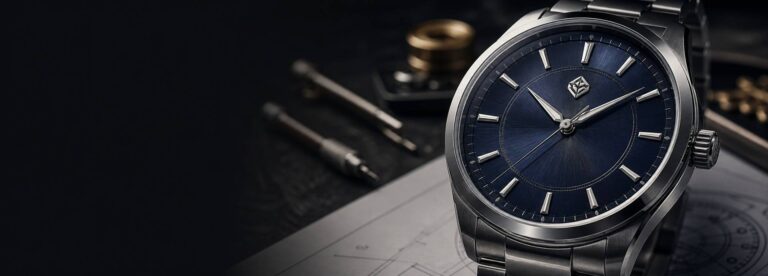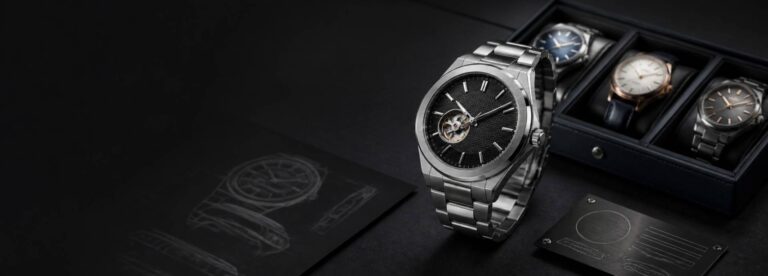
A mechanical watch OEM project follows a structured path from an initial product brief to final delivery. The core stages typically include feasibility review, design and specification, component development, tooling where required, prototype approval, material preparation, production, quality control, packaging, and shipment.
For brands planning a custom automatic or mechanical watch collection, understanding this process is essential. It helps you set realistic expectations, prepare the right information early, reduce avoidable revisions, and keep decisions moving at the points that matter most.
The exact mechanical watch OEM process timeline varies by design complexity, movement selection, component availability, tooling requirements, sample revisions, order quantity, packaging, and shipping arrangements. A project based on an established platform may progress differently from one requiring a new case, bracelet, dial construction, or other proprietary components.
Important: ZELX works with brands, retailers, distributors, and organizations planning commercial production orders. We do not provide one-off personal watch customization.
What Is Included in a Mechanical Watch OEM Project?
A mechanical watch OEM project involves more than putting a logo on an existing watch. OEM manufacturing can include product engineering, component selection, design refinement, technical validation, prototype development, production planning, assembly, testing, quality control, packaging, and export preparation.
The project scope depends on your requirements. Some brands may need a highly customized watch with a new case, dial, hands, strap, packaging, and product identity. Others may begin with an established platform and customize selected elements to fit their market positioning.
A typical OEM watch project may involve:
- Product concept and target-market review
- Case design, dimensions, material, and finishing
- Automatic or mechanical movement selection
- Dial, hands, indexes, logo, and date-display configuration
- Crystal, crown, bezel, caseback, and water-resistance requirements
- Leather strap, rubber strap, metal bracelet, buckle, or clasp selection
- Tooling and engineering development for new parts
- Prototype and sample review
- Production scheduling and material preparation
- Assembly, testing, inspection, and packaging
- Delivery coordination and required shipping documents
For a basic explanation of the model, see What Is OEM Watch Manufacturing? A Complete Guide for Brands. For an overview of the project journey, visit our Customization Process page.
Mechanical Watch OEM Process: Step by Step
The following eight steps explain how a typical mechanical watch OEM project moves from concept to delivery.
Step 1: Project Brief and Feasibility Review
The OEM process begins with a detailed project brief. This is where the brand explains what it wants to build, who it is for, how it will be sold, and what commercial constraints apply.
A useful brief should include:
- Your brand, company profile, and target customer
- Target retail price or target product budget
- Preferred watch category, such as dress, sport, dive, field, skeleton, or classic automatic
- Desired case size, shape, and materials
- Preferred movement type and functions
- Visual references and brand guidelines
- Dial, logo, strap, bracelet, and packaging requirements
- Estimated order quantity
- Target sales markets and desired launch timing
The manufacturer then reviews whether the concept is technically feasible, commercially practical, and compatible with the expected quantity. This early evaluation can identify issues before resources are committed to engineering or samples.
A good feasibility review may lead to recommendations on case construction, movement compatibility, material choices, finishing, component availability, or a more suitable production route.
If speed to market is the main goal, a proven platform may be more appropriate than fully custom engineering. Read Private Label Mechanical Watches: The Fastest Route to Market to understand when that route may be a better fit.
Step 2: Design Direction and Technical Specification
Once the project direction is confirmed, the next stage is to convert the brand concept into a clear technical specification.
This does not always mean that the client needs to submit a finished technical drawing. A professional OEM partner can help turn sketches, visual references, mood boards, and brand assets into a more defined product proposal. However, the clearer the initial information, the more efficiently the project can proceed.
The technical specification may define:
- Case diameter, thickness, lug-to-lug measurement, and shape
- Case material, such as 316L stainless steel, titanium, ceramic, or another suitable option
- Case finishing, including polished, brushed, bead-blasted, or mixed surfaces
- Mechanical or automatic movement and complication requirements
- Dial layout, indexes, hands, logo placement, and date window
- Crystal type and display-back requirements
- Crown, bezel, caseback, and water-resistance configuration
- Strap, bracelet, clasp, buckle, and quick-release requirements
- Packaging, warranty card, manual, and outer-box needs
At this stage, it is important to align the technical specification with the target market and retail position. A watch intended for premium retail needs a coherent relationship between movement, materials, case construction, dial execution, strap or bracelet, and packaging.
For brands developing an automatic watch from a concept, see Custom Automatic Watches OEM: From Design to Production.
Step 3: Component Selection and Engineering Development
After the specification is approved, the OEM team evaluates the technical relationship between all major components. A mechanical watch requires precise compatibility between its movement, case, dial, hands, crown, crystal, caseback, and strap or bracelet system.
This stage may include:
- Confirming movement dimensions and functional layout
- Matching the dial and hands to the movement
- Checking case thickness and internal clearances
- Defining crown and stem compatibility
- Selecting crystal shape and mounting structure
- Evaluating caseback design and movement visibility
- Confirming date-window position, if applicable
- Reviewing water-resistance construction
- Selecting straps, bracelets, clasps, and attachment systems
- Assessing the manufacturability of custom components
For a highly customized project, engineering development may identify parts that require revision before samples can be made. This is normal. The purpose is to resolve technical issues before full production, where changes become more expensive and difficult.
The more unique your design is, the more attention this stage requires. A new case profile, unusual dial geometry, exclusive bracelet, or special complication can involve additional engineering work.
Step 4: Tooling and Prototype Preparation
Tooling may be required when a project includes components that do not already exist in a production-ready form. Depending on the design, this may include case parts, bezel structures, crowns, casebacks, dial elements, hands, bracelet links, buckles, or packaging components.
Not every OEM project requires extensive new tooling. The requirements depend on how much of the watch is proprietary and how much can be based on existing compatible components.
Tooling development generally involves:
- Reviewing engineering drawings and tolerances
- Preparing molds, dies, fixtures, or machining processes
- Producing initial component samples
- Checking dimensional accuracy and surface finishing
- Revising components where necessary before final prototype assembly
Prototype preparation then brings the components together into a functional sample. This stage is critical because it transforms digital designs, drawings, or visual references into a product that can be physically evaluated.
A prototype may reveal issues that are not visible in a rendering, such as case proportions, dial readability, hand clearance, crown feel, strap integration, movement fit, or the effect of finishing under real light.
For a deeper guide to this phase, see [Watch Prototyping: What to Expect in OEM Samples].
Step 5: Sample Review and Approval
Sample approval is one of the most important decision points in the mechanical watch OEM process. It confirms that the product matches the approved direction before material commitments and full production proceed.
A physical sample should be reviewed for both function and appearance.
Key checks typically include:
- Case size, shape, weight, and wrist presence
- Surface finishing, polishing, brushing, and engraving
- Dial color, texture, logo accuracy, and print quality
- Index, hand, date-window, and minute-track alignment
- Movement function, crown operation, hand setting, and date change
- Crystal clarity and reflection behavior
- Strap or bracelet fit, comfort, and hardware quality
- Caseback execution and branding
- Packaging materials, printing, inserts, and overall presentation
Clients should consolidate feedback and provide it in a clear written format. Multiple uncoordinated feedback rounds can slow progress and create ambiguity. It is usually more effective to appoint a single decision-maker or central project contact.
Before production begins, confirm the final specifications, approved artwork, color references, finish standards, branding placement, packaging content, and inspection expectations in writing.
Step 6: Production Planning and Material Preparation
After final sample approval, the project moves into production planning. This phase coordinates the materials, components, assembly sequence, packaging, quality-control requirements, and delivery preparation.
Production planning may include:
- Confirming the final bill of materials
- Procuring movements, cases, dials, hands, crystals, crowns, straps, and packaging
- Scheduling component manufacturing and finishing
- Organizing printing, engraving, logo application, and other branding work
- Preparing assembly instructions and inspection criteria
- Confirming packaging components and printed inserts
- Coordinating production capacity and target delivery arrangements
This is also the stage where last-minute changes should be avoided. A revision to a dial color, logo, case finish, packaging size, or strap configuration after materials are ordered can affect cost, timing, and consistency.
The watch OEM process timeline is often influenced by component sourcing and material availability. Early approval of critical choices helps reduce uncertainty later in the project.
Step 7: Assembly, Testing, and Quality Control
During production, the watch is assembled through a controlled sequence that brings the movement, dial, hands, case, crown, crystal, caseback, strap or bracelet, and packaging together.
Mechanical watch assembly may involve:
- Movement preparation and placement
- Dial and hand installation
- Casing, crown, stem, and caseback assembly
- Bracelet or strap attachment
- Functional checks and time-setting verification
- Cosmetic inspection of visible components
- Packaging assembly and final presentation checks
Quality control procedures should be defined according to the confirmed project requirements and production plan. Depending on the watch configuration, checks may address movement operation, winding and setting behavior, date function, hand alignment, visible finishing, dial print quality, case condition, strap or bracelet fit, and packaging completeness.
For a more detailed look at inspection standards and production checks, read [Quality Control in Mechanical Watch Production].
Step 8: Packaging, Final Inspection, and Delivery
The final stage prepares the completed watches for shipment and commercial launch. It includes packing, final inspection, documentation, and coordination of delivery arrangements.
Typical final steps include:
- Verifying watch appearance and final presentation
- Confirming packaging contents and printed materials
- Checking product quantities and carton packing
- Preparing invoices, packing lists, and export documents as required
- Confirming shipment method and destination details
- Coordinating delivery timing, logistics, and receiving requirements
For international projects, brands should also plan for destination-market requirements, import procedures, warehousing, fulfillment, and after-sales handling. Shipping is not just an operational detail; it is part of the final customer experience and launch schedule.
What Affects the Mechanical Watch OEM Timeline?
The timeline for a custom mechanical watch project depends on the full scope of the project, not on one single production step.
The main factors include:
- Whether the project uses existing components or requires new engineering
- Complexity of the case, dial, hands, movement, bracelet, and packaging
- Need for new tooling, molds, fixtures, or proprietary parts
- Availability of selected movements and materials
- Number of prototype or sample revision rounds
- Speed and clarity of client feedback and approvals
- Order quantity and production scheduling
- Complexity of inspection, packaging, and shipping arrangements
- Destination-market documentation and logistics requirements
A simple, well-defined project using compatible components may move more efficiently than a project involving a new case, complex complication, exclusive bracelet, special dial construction, or multiple rounds of revisions.
For a dedicated guide to lead-time planning, see [Custom Watch Lead Time: From Brief to Delivery].
How Clients Can Keep an OEM Watch Project on Schedule
The most effective way to protect an OEM project schedule is to make important decisions early and keep the approval process organized.
You can help keep your project on track by:
- Providing a clear brief before design work begins
- Sharing logo files in vector format and confirming brand guidelines
- Identifying a realistic target market, retail position, and order quantity
- Choosing a limited number of design directions and product variants
- Appointing one person to consolidate internal feedback
- Reviewing samples promptly and recording changes in writing
- Confirming final artwork, finishes, packaging, and inspection requirements before production
- Discussing shipping, destination markets, and required documents early
- Avoiding major design changes after tooling or material procurement begins
A disciplined decision process does not limit creativity. It gives the team enough clarity to convert a brand idea into a repeatable, manufacturable product.
Mechanical Watch OEM Process FAQ
A mechanical watch OEM project does not have one universal timeline. The duration depends on design complexity, tooling needs, movement and component availability, sample revisions, order quantity, packaging, quality-control requirements, and shipping arrangements. A project based on proven components may move differently from one requiring new engineering and proprietary tooling.
Provide your company profile, target customer, estimated order quantity, target price position, preferred watch style, movement preference, case size and material direction, logo files, visual references, packaging requirements, target market, and expected launch timing. A complete initial brief makes feasibility evaluation more efficient.
Not always. Technical drawings are helpful, especially for highly custom designs, but a project can often begin with a clear brief, visual references, sketches, logo files, and commercial requirements. The final production specification should be confirmed before tooling and mass production begin.
Private label generally starts from an existing, manufacturable watch platform and focuses on branding and selected customization. Mechanical watch OEM can involve deeper design, component, structural, and engineering development. The better route depends on how much originality, control, development time, and investment your product requires.
Read Private Label, OEM, and ODM Watch Manufacturing: Which Is Right for You? for a detailed comparison.
Yes. Depending on the project scope, OEM watch development can include dial logos, caseback branding, crown or buckle details, straps, bracelets, watch boxes, warranty cards, manuals, hangtags, and outer packaging. These elements should be specified and approved before production.
Start Your Mechanical Watch OEM Project
A successful mechanical watch OEM project is a sequence of informed decisions: define the product direction, validate technical feasibility, develop and approve the sample, prepare materials, manage production, inspect the finished watches, and coordinate delivery.
The more clearly you define your requirements at the beginning, the more effectively the OEM team can recommend a production path that fits your product vision, target market, order quantity, and launch plan.
ZELX supports qualified B2B clients worldwide with custom automatic and mechanical watch OEM projects. Share your concept, target market, estimated quantity, technical requirements, branding direction, and desired launch schedule to begin a feasibility discussion.