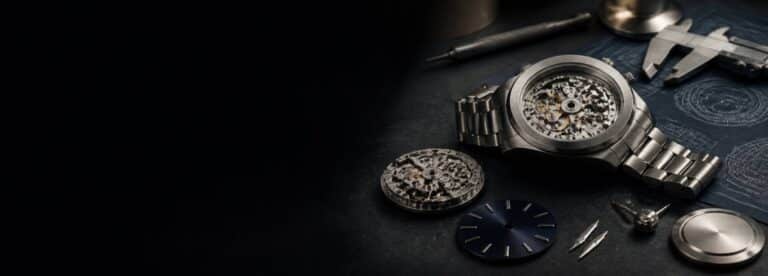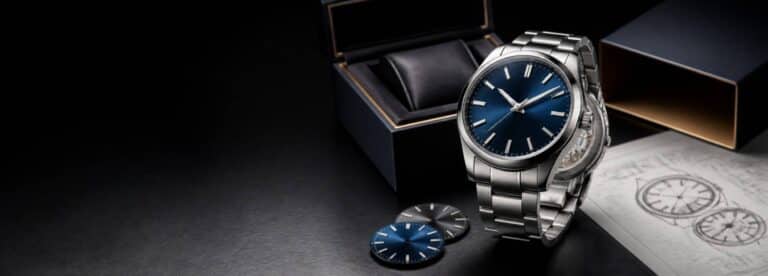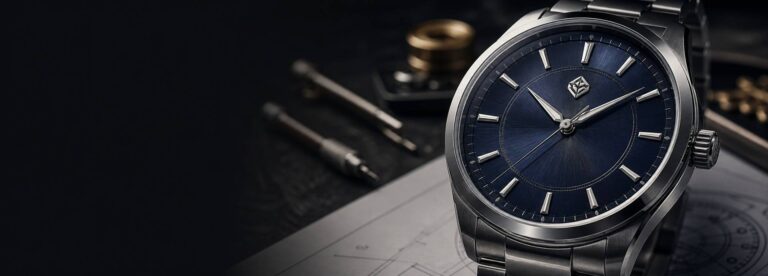
High-end watch customization via OEM enables a brand to develop a mechanical or automatic watch with its own design language, specification, and market position—then bring that product to production with an experienced manufacturing partner. It goes far beyond placing a logo on a standard model. A true high-end project coordinates case architecture, materials, movement selection, dial execution, finishing, prototyping, and quality control.
For brands, retailers, distributors, corporate buyers, and design-led watch ventures, OEM development offers a practical route from an initial concept to a production-ready luxury mechanical timepiece. The right process helps turn creative intent into a watch that can be consistently manufactured, inspected, packaged, and delivered for your target market.
Quick answer: High-end watch customization is the OEM development of a distinctive luxury watch using tailored components, materials, finishes, branding, and technical specifications. The scope can range from a customized dial and packaging to a newly developed case, bespoke component set, and fully engineered production program.
What Does High-End Watch Customization Mean?
High-end watch customization means developing a watch around a defined product identity rather than selecting a ready-made watch and applying a logo. The project begins with the question: what should make this watch recognizably yours?
That answer may be expressed through the proportions of a case, the way light moves across a dial, a chosen automatic movement, a signature handset, a bracelet profile, or a specific combination of brushed and polished surfaces. In a well-managed OEM project, those visual decisions are evaluated alongside engineering feasibility, sourcing, durability, assembly requirements, target quantity, and cost.
This distinction matters because the terms custom, private label, and OEM are often used interchangeably. They do not always describe the same level of development.
| Development approach | Typical scope | Best suited to |
|---|---|---|
| Private label | Existing watch platform with logo, dial, strap, engraving, or packaging changes | Brands seeking a faster route to market |
| Component-level customization | Customized dial, hands, colors, finishes, strap, bracelet, bezel, or caseback | Brands that need stronger differentiation using proven architecture |
| OEM watch development | A defined specification supported by technical review, samples, component sourcing, and production planning | Brands creating a distinctive mechanical or automatic collection |
| Bespoke high-end development | New case or component development, original design language, premium materials, special finishing, and limited-edition details | Premium brands, flagship models, and design-led limited projects |
If your objective is to create an original product line rather than simply brand an existing model, explore our OEM watch manufacturing services before preparing your project brief.
What Can Be Customized in a Luxury Mechanical Watch?
A luxury watch is experienced as a complete object. Its quality is not determined by a single part; it comes from how each component works visually and mechanically with the others. High-end watch customization can therefore cover both the visible details and the technical decisions beneath them.
Case architecture, materials, and finishing
The case establishes the physical character of the watch. It determines wrist presence, ergonomics, water-resistance design, and much of the perceived quality.
Common areas for customization include:
Case diameter, thickness, lug-to-lug length, and lug profile
Bezel shape, crown design, caseback construction, and crystal configuration
316L stainless steel, titanium, ceramic, and other project-appropriate materials
Brushed, polished, bead-blasted, PVD-coated, DLC-coated, or mixed surface treatments
Exhibition casebacks, engraved casebacks, and limited-edition numbering
Crystal type, anti-reflective treatment requirements, and water-resistance targets
A new case design can create stronger product identity, but it may also require development time, engineering review, and tooling investment. An OEM partner should explain those trade-offs early, before the design is committed to production.
Mechanical and automatic movement selection
The movement is central to the product’s positioning, user experience, and service expectations. For an automatic or mechanical watch, selection should be based on the intended design, functional requirements, price positioning, availability, and production plan—not solely on a movement name.
A project brief may define:
Automatic, manual-winding, open-heart, skeleton, or date-display configuration
Movement dimensions and the case architecture needed to support them
Power-reserve expectations and dial-side display requirements
Rotor appearance, movement decoration possibilities, and exhibition caseback presentation
Serviceability and long-term sourcing considerations
For a broader introduction to the development route for automatic models, see Custom Automatic Watches OEM: From Design to Production.
Dial, hands, and brand identity
The dial is where brand recognition is most immediate. It is also where small tolerances and finishing choices become highly visible. A strong high-end design balances visual character with legibility and manufacturability.
Customization options may include:
Dial layout, logo placement, index style, chapter ring, and date-window position
Sunray, matte, brushed, textured, multi-layer, or other suitable dial treatments
Applied indices, printed markers, luminous application, and color matching
Custom hands, hand length, hand stack clearance, and surface finishing
Open-heart or skeleton apertures, where technically suitable
Brand marks, limited-edition text, and regulated-market marking requirements
Before approving a final dial design, review it at the actual watch size. Details that look balanced in a large digital rendering can become crowded or lose contrast on a 38 mm, 40 mm, or 42 mm dial.
Straps, bracelets, clasps, and wearability
The strap or bracelet has an outsized effect on comfort and the way a watch is perceived. It should be considered as part of the product architecture, not as an afterthought.
Potential choices include leather straps, rubber straps, stainless-steel bracelets, end-link design, buckle or deployant clasp configuration, quick-release systems, stitching, lining, and branded hardware. For a high-end collection, ensure the strap, clasp, and case finishing feel coherent when viewed together.
Packaging and final presentation
A luxury watch project continues beyond the watch itself. Packaging helps deliver the first physical brand experience and can support retailer presentation, gifting, warranty administration, and limited-edition storytelling.
Typical items include custom watch boxes, outer cartons, warranty cards, instruction manuals, hangtags, serial-number labels, and protective transport packaging. Define packaging requirements early when they affect dimensions, materials, printing, or production timing.
How Does High-End Watch OEM Customization Work?
A reliable OEM process is structured to reduce uncertainty before mass production. While project details vary, the following sequence is a practical framework for luxury mechanical watch customization.
1. Define the brand brief and product position
Start with the commercial and design intent. State the target customer, intended retail position, desired quantity, target launch timing, reference models, and essential visual characteristics. A concise brief can be more useful than an unstructured collection of images.
Useful inputs include a mood board, sketches, CAD files, technical drawings, reference watches, required dimensions, movement preference, material preference, and target order quantity.
2. Review design feasibility
The manufacturer evaluates whether the requested design can be produced as intended. This is where visual ambition meets technical reality: case construction, movement fit, hand clearance, dial thickness, crystal geometry, water-resistance requirements, finishing limits, and component sourcing all need review.
A good feasibility discussion should identify open decisions and alternatives. For example, a change in case thickness, crown construction, or index process may improve manufacturability while preserving the key design intent.
3. Confirm specifications, materials, and quotation basis
Once feasibility is clearer, convert the concept into a working specification. This should cover dimensions, materials, movement, dial construction, hands, crystal, strap or bracelet, buckle, caseback, packaging, finishing requirements, quantity, and quality expectations.
A meaningful quotation depends on a meaningful specification. The more complete the project information, the more accurately an OEM partner can assess development requirements and production costs.
4. Develop drawings, samples, and prototypes
Drawings and samples are the bridge between an idea and repeatable manufacturing. Depending on the project, this stage may involve CAD confirmation, component samples, color or surface-finish samples, a functional prototype, or pre-production samples.
Do not treat sample approval as a formality. Review the overall proportions, dial legibility, alignment, hand clearance, case finishing, bracelet or strap fit, crown operation, and visual consistency under normal viewing conditions.
5. Approve the production standard
Before volume production begins, document the approved reference sample and key acceptance points. This gives both the brand and the factory a shared standard for color, finishing, assembly, branding, packaging, and quality inspection.
6. Produce, assemble, and inspect
Production normally involves component preparation, case and dial work, movement assembly, hand setting, casing, testing, visual inspection, packaging, and final checks. Quality control should focus on the details that matter to the final wearer: alignment, cosmetic condition, function, assembly quality, and packaging accuracy.
7. Pack and arrange delivery
Once final inspection is complete, the watches are packed for the required shipping method and destination. International projects should also clarify documents, labeling, packaging protection, and delivery arrangements early in the program.
For a more detailed overview, visit our custom watch development process.
What Determines the Cost of High-End Watch Customization?
There is no universal cost for a bespoke luxury watch OEM project. The final cost is driven by development scope and production requirements, not by the word “luxury” alone.
Key cost variables include:
- Whether the project uses an existing platform, customized components, or a new case and tooling program
- Case material, crystal specification, water-resistance construction, and finishing complexity
- Movement type, availability, functions, and integration requirements
- Dial construction, applied elements, luminous treatment, custom hands, and decorative details
- Strap, bracelet, clasp, and branded hardware requirements
- Packaging design, printed materials, serial numbering, and accessory requirements
- Sample rounds, required lead time, order quantity, and inspection requirements
The best way to receive a useful quotation is to provide a clear project brief with reference images or drawings and a target order quantity. If parts of the specification remain open, an experienced OEM team can suggest options at different development levels.
How to Choose a High-End Watch OEM Partner
For a premium project, selecting a manufacturer is not only a capacity decision. It is a product-development decision. The right partner should help your team identify risks early and translate design intent into an achievable specification.
Use the following questions during supplier evaluation:
Can the manufacturer review the technical feasibility of your reference design or drawings?
Can it explain the implications of material, movement, case, and finishing choices?
Does it have a defined sample-approval and production-control process?
Can it communicate clearly about development scope, tooling, lead time, and project dependencies?
Does it have a practical approach to design confidentiality and ownership boundaries?
Can it support the documentation, packaging, and delivery needs of an international B2B project?
For further guidance, read How to Choose the Right Mechanical Watch OEM Manufacturer and IP Protection in Watch OEM Projects.
Frequently Asked Questions
Private label usually starts with an established watch model and applies brand-specific changes such as the logo, dial, strap, engraving, or packaging. High-end watch customization may include those elements but can also involve original case architecture, component development, tailored finishing, detailed technical specifications, and a bespoke production plan.
Yes. A drawing, sketch, mood board, CAD file, or reference image is a useful starting point for an OEM feasibility review. The manufacturer will normally assess the design, identify technical questions, recommend materials and components, and develop the information needed for sampling and quotation.
Prepare your target quantity, reference images or technical drawings, preferred case size and material, desired movement type, dial and strap or bracelet requirements, packaging needs, target market, and preferred launch timing. If you do not have every detail, identify which elements are essential and which are open to recommendation.
They may be required when the project uses a newly developed case, bezel, crown, caseback, or another original structural component. Whether tooling is necessary depends on the design and whether suitable existing components can meet the specification. This should be confirmed during feasibility review.
Timing depends on design complexity, component availability, sample approval, tooling needs, order quantity, and production scheduling. A project should be planned as a sequence of development, sample approval, production, quality control, and delivery stages rather than as a single fixed date. Discuss the launch target at the start so the critical path can be evaluated realistically.
Yes. An OEM partner can help match a movement, case material, dial process, crystal, strap or bracelet, and finish to the product concept, technical requirements, and production plan. Final choices should be documented in the approved specification and sample standard.
Begin Your High-End Watch OEM Project
High-end watch customization succeeds when brand vision and production discipline are developed together. Whether you have a complete technical package or only a design direction, a structured OEM review can clarify feasibility, development options, and the next steps toward a production-ready mechanical watch.
Share your concept, reference images, or technical drawings with the Zelx team for a confidential OEM feasibility review. We work with business customers seeking custom mechanical and automatic watch programs—not one-off individual watch orders.