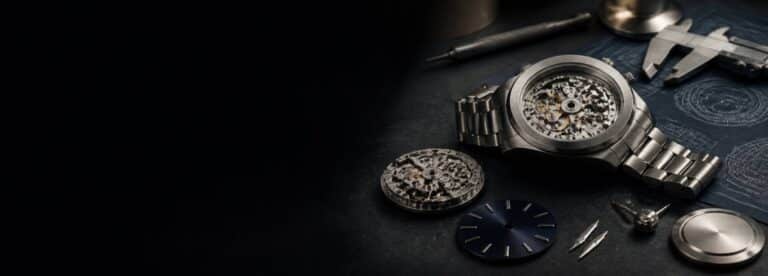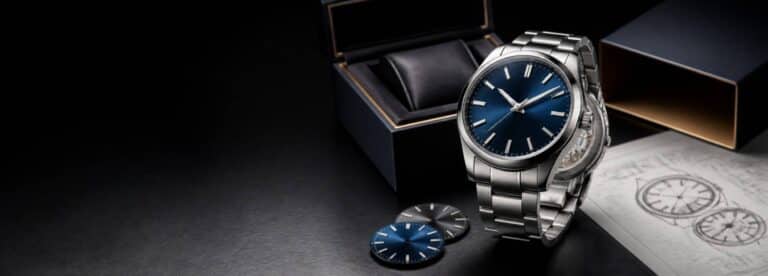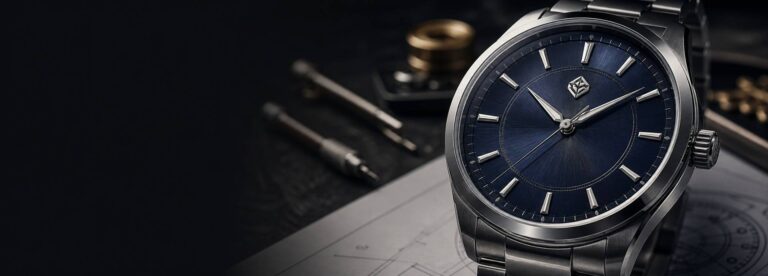
Private label watch manufacturing is a business model in which a brand launches watches using an established, production-ready watch platform supplied by a manufacturer, then customizes selected brand-facing elements. Depending on the project, those elements can include the logo, dial design, hands, strap or bracelet, caseback engraving, packaging, and product documentation.
For businesses that want to introduce a mechanical or automatic watch collection without beginning with a fully new case and component-development program, private label can provide a practical path to market. It lets a brand focus on positioning, design direction, sales channels, and customer experience while working from a platform that has already been developed for production.
Quick answer: Private label watch manufacturing uses an existing watch platform as the foundation for a branded collection. It is typically faster and requires less product-development work than a fully bespoke OEM watch project, while still allowing meaningful customization of the watch’s visual identity and presentation.
This guide explains how private label watches work, what can be customized, how the model differs from white label and custom OEM manufacturing, and what to prepare before requesting a quotation.
What Is Private Label Watch Manufacturing?
In a private label watch project, the manufacturer provides an established watch platform and the brand defines the visible and commercial elements that make the finished product its own. Instead of designing every structural component from the beginning, the brand starts with a case, movement configuration, and production process that are already suitable for manufacturing.
The level of customization can vary. A straightforward project may involve a branded dial, a chosen strap, caseback engraving, and custom packaging. A more developed private label program may include a specific dial layout, custom hands, unique colors, a selected finish, a bracelet or clasp option, and a defined product presentation system.
Private label does not mean that every project is identical. It means the project begins with a production-ready foundation rather than requiring a completely new watch architecture. This distinction can reduce development complexity and help a brand concentrate resources where customers see and experience them most directly.
Private Label vs. White Label vs. Custom OEM Watches
The labels white label, private label, and OEM are sometimes used loosely. For a brand planning a watch collection, the practical difference is the development depth, level of control, and amount of engineering required.
| Manufacturing model | Starting point | Typical customization | Development scope | Best suited to |
|---|---|---|---|---|
| White label | Standard, ready-to-sell product | Limited branding or packaging changes | Minimal | Businesses testing a market or purchasing standard products |
| Private label | Established watch platform | Logo, dial, hands, strap or bracelet, engraving, selected finishes, packaging | Moderate | Brands, retailers, and distributors building a differentiated collection efficiently |
| Custom OEM | Product brief or original concept | Components, design language, technical specification, and potentially new structural elements | Higher | Brands seeking stronger originality, long-term differentiation, or a new product architecture |
A private label program is often the right middle ground. It offers more brand control than a simple white label model, without requiring the time and investment associated with a fully bespoke watch.
If your brief includes a new case shape, a new crown or bezel construction, or an original structural design, you may need a deeper OEM watch manufacturing program. For projects focused on a premium, more original development route, see High-End Watch Customization via OEM.
What Can You Customize in a Private Label Watch?
The exact options depend on the selected platform, components, production requirements, and target quantity. During an early review, the manufacturer should clarify which choices are available from existing options and which may require additional development.
Dial design and logo application
The dial is often the most important branding surface on a private label mechanical watch. It is where a customer first recognizes the brand, reads time, and notices the product’s design character.
Depending on the platform, customization may include:
- Brand logo placement and print method
- Dial color and surface treatment
- Applied or printed indices
- Chapter ring, minute track, and date-window treatment
- Luminous details, subject to the component design
- Limited-edition text, model name, and other appropriate markings
- Custom hands from available or project-approved options
A dial should be designed at the actual watch size, not only on a large screen. Legibility, index alignment, contrast, and hand clearance all need review before approval.
Caseback engraving and model identification
A branded caseback can give a private label watch a more complete identity. Common options include a logo, collection name, model reference, serial or limited-edition numbering, and selected graphic elements.
The available engraving method, layout area, and level of detail depend on the caseback construction. Keep mandatory product markings, branding, and limited-edition details organized so the final design remains clean and readable.
Straps, bracelets, and clasps
A strap or bracelet influences comfort, perceived value, and the visual direction of the collection. A watch with the same case and dial can feel entirely different when paired with a leather strap, rubber strap, or steel bracelet.
Private label options may include:
- Leather, rubber, nylon, or stainless-steel bracelet choices
- Strap color, texture, stitching, and lining options
- Buckle or deployant clasp selection
- Branded buckle or clasp details where appropriate
- Quick-release systems when supported by the platform
Choose a strap or bracelet that matches the intended positioning. A dress-oriented mechanical watch, a sport automatic model, and a premium everyday watch may share some components, but they should not necessarily use the same wearing solution.
Selected case, bezel, and finishing options
Some private label platforms offer configurable case sizes, finishes, bezel styles, crown options, and crystal or caseback configurations. For example, a brand may choose a polished, brushed, or mixed finish; a different dial-and-bezel combination; or a transparent caseback for an automatic movement.
These options should be evaluated as a complete design system. A dial color, hand finish, case surface, and bracelet finish should reinforce the same product identity rather than compete with one another.
Packaging, documentation, and brand presentation
Custom packaging helps turn a watch into a branded product experience. It may also support retailer display, warranty handling, gifting, and direct-to-consumer shipping.
A private label watch program can include:
- Watch box and outer carton design
- Printed logo, color system, and artwork
- Warranty card and instruction manual
- Hangtags, protective materials, and label requirements
- Model identification and serial-number presentation
Packaging should be planned alongside the watch, especially when it includes custom dimensions, materials, printing, or branded inserts.
Who Is Private Label Watch Manufacturing For?
Private label watch manufacturing is designed for organizations building a repeatable product program, not for one-off individual watch orders. It can be a suitable model for:
- New watch brands that want to launch a focused first collection
- Established brands adding mechanical or automatic watches to their product range
- Retailers, distributors, and e-commerce businesses developing exclusive branded products
- Corporate buyers planning branded gifting, commemorative programs, or customer rewards at a defined business quantity
- Design studios or licensing teams managing watch collections for an existing audience
It is particularly useful when speed, brand consistency, and manageable development scope matter as much as product differentiation.
How Does the Private Label Watch Process Work?
A clear process makes it easier to turn an initial idea into an approved product. Exact steps vary by platform and project requirements, but most private label watch programs follow a sequence like this.
1. Choose a watch platform and collection direction
Begin with the broad product direction: dress watch, sport watch, diver-inspired model, skeleton style, classic automatic design, or another category relevant to your brand. Review available case shapes, dimensions, movement configurations, and strap or bracelet options.
At this stage, define your target customer, intended price position, target order quantity, and launch timing. Those decisions help narrow the platform options.
2. Prepare your brand and design inputs
Provide your logo files, brand guidelines, preferred colors, reference images, dial ideas, packaging references, and any required text or markings. If you do not have a finished dial design, a mood board and a clear design direction can still support an initial discussion.
It is helpful to distinguish between non-negotiable requirements and preferences. For example, an exhibition caseback or a specific case size may be essential, while the exact hand style may remain open for recommendation.
3. Confirm customization options and project feasibility
The manufacturer reviews the selected platform and confirms what can be customized within it. This may cover dial artwork, logo application, hands, strap or bracelet, engraving, packaging, and available finishing options.
This review should also identify any additional development requirements, component limitations, approval milestones, and lead-time factors.
4. Approve artwork, specification, and quotation basis
Before sampling or production, document the selected configuration. The specification should clearly state the watch platform, movement configuration, case and dial details, hands, strap or bracelet, logo artwork, caseback engraving, packaging, quantity, and quality expectations.
A well-defined specification prevents avoidable differences between a screen mockup and the delivered product.
5. Review samples before production
A sample allows the brand to assess the actual product: proportions, dial appearance, logo position, hand alignment, strap or bracelet fit, case finishing, packaging, and overall presentation.
Sample approval should be based on a real review process. Check the watch under normal lighting, wear it if possible, compare it with the agreed specification, and record any required corrections before authorizing volume production.
6. Produce, inspect, package, and deliver
After approval, production proceeds according to the agreed specification and quantity. The manufacturer assembles, inspects, packages, and prepares the order for the agreed delivery arrangement.
For a fuller view of the stages from concept to delivery, visit our custom watch development process.
MOQ, Lead Time, and Cost: What Affects a Private Label Project?
There is no single MOQ, lead time, or price that applies to every private label watch project. The practical answer depends on the selected platform, customization depth, components, packaging, order quantity, sample requirements, and production schedule.
Minimum order quantity
A minimum order quantity is often influenced by the parts that must be customized. A standard strap may be available at a different quantity than a custom dial, printed packaging, custom clasp, or specialized color treatment.
When you request a quotation, provide the target quantity and indicate whether you expect an initial launch order, repeat production, or multiple models. This helps the manufacturer recommend a commercially practical route.
Lead time
Lead time is usually shaped by artwork approval, component availability, sample rounds, packaging requirements, order quantity, production scheduling, quality inspection, and shipping preparation. A clear early brief reduces preventable delays because it allows critical decisions to be made before the production schedule is fixed.
Cost factors
Private label project costs are commonly affected by:
- Watch platform and movement configuration
- Dial complexity, logo process, indices, hands, and surface treatment
- Strap, bracelet, buckle, or clasp selection
- Caseback engraving and limited-edition details
- Packaging, printed materials, and accessories
- Sampling requirements and requested approval changes
- Order quantity, inspection requirements, and delivery arrangement
For a stronger quotation, share a concise brief, reference images, logo files, desired configuration, and approximate target quantity. If you are still comparing options, state the target positioning and priorities so suitable alternatives can be proposed.
How to Choose a Private Label Watch Manufacturer
The best private label watch manufacturer is not simply the one that shows the largest catalogue. Look for a partner that can explain the available options, document the specification, and guide the project through sample approval and production.
Ask these questions before selecting a supplier:
- Which watch platforms and mechanical or automatic movement configurations are available for the intended collection?
- Which details can be customized without new tooling, and which changes require additional development?
- How will dial artwork, logo placement, caseback engraving, and packaging be approved?
- What sample process is used before mass production?
- How are the approved configuration and quality expectations recorded for production?
- What information is needed to provide an accurate MOQ, lead-time estimate, and quotation?
- How will confidential brand files, design references, and artwork be handled?
If your project is likely to move from a private label platform to a more original product architecture, read How to Choose the Right Mechanical Watch OEM Manufacturer and IP Protection in Watch OEM Projects.
Frequently Asked Questions
A private label watch is a watch sold under your own brand using an established manufacturer platform. The watch can be customized with selected brand elements such as a logo, dial, hands, strap or bracelet, caseback engraving, and packaging, depending on the chosen program.
Not necessarily. White label commonly refers to a standard product with limited branding changes. Private label generally allows a brand to create a more distinctive version of an established platform through branded and selected component-level customization. The exact scope should be confirmed with the manufacturer.
Yes. Private label programs can be structured around established automatic watch platforms where available. Movement choice, case configuration, dial layout, crystal, caseback, and strap or bracelet options should be reviewed together to ensure the final watch meets the intended product position.
Yes. Your logo and dial direction are common starting points for a private label project. Supply artwork in an appropriate file format and provide reference images, color guidance, and required text. The final layout should be reviewed at the actual watch size before production approval.
Not usually when the project uses an existing platform and available components. New molds or tooling may be needed if you request a new case, bezel, crown, caseback, or another original structural component. A feasibility review will clarify the appropriate route.
Send your logo, reference images or product direction, preferred watch type, intended quantity, required customization, packaging needs, target market, and desired timing. You can also share a mood board if you are still developing the final design.
No. Private label watch manufacturing is intended for business customers developing a product collection or organized program at a commercial quantity. It is not designed for individual, single-watch custom orders.
Launch Your Private Label Watch Collection
Private label watch manufacturing can give a brand a disciplined, efficient route to a mechanical or automatic watch collection—without requiring every part to be developed from the beginning. The strongest projects combine a clear brand direction with a well-defined platform, thoughtful customization choices, accurate artwork, and a careful sample review.
If you are developing a branded mechanical or automatic watch collection for a business project, share your logo, reference images, preferred watch style, and target quantity with the Zelx team. We can review the available private label options and help you define the next practical step.